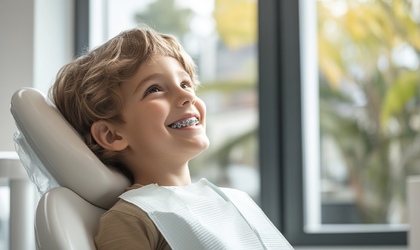
A palatal expander is an orthodontic device that gently widens the upper jaw. It sits across the roof of the mouth and attaches to the back teeth, applying slow, steady pressure to widen the jaw over a few weeks. Most palatal expanders are used in children while their jaws are still growing.
Orthodontists use expanders to correct problems caused by a narrow upper jaw, such as crossbites and crowded teeth. Not every child needs one, but in the right cases, an expander can prevent bigger problems later.
What Is a Palatal Expander and What Does It Treat?
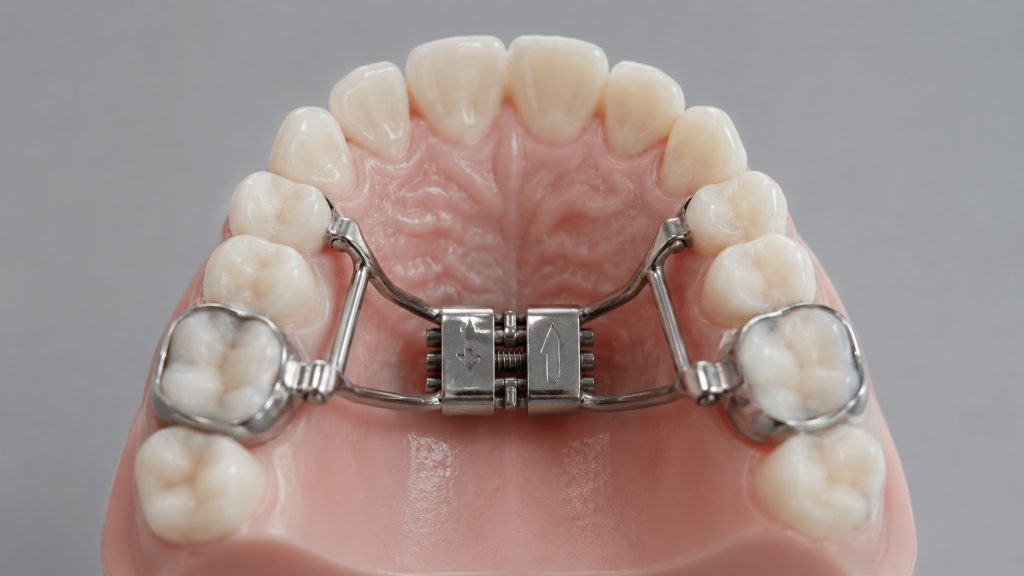
A palatal expander is a custom device that widens the upper jaw, also called the palate, by slowly pushing the two halves of the bone apart. In growing children, those halves haven’t fully joined yet, so the jaw can be widened without surgery.
Expanders treat problems caused by a jaw that’s too narrow. An orthodontist most often recommends one for these issues:
- Crossbite – the upper teeth bite inside the lower teeth. Widening the jaw lines, the bite backs up.
- Crowding – a narrow jaw doesn’t leave enough room for all the teeth. The expander makes space so teeth can come in straight.
- Impacted teeth – a tight jaw can block adult teeth from coming in. Extra width gives them room to erupt.
- Breathing trouble – widening the upper jaw also opens the nasal floor, which can improve airflow for some kids.
How Does a Palatal Expander Work?
A palatal expander works a lot like braces, using gentle pressure to move things into place over time. The difference is that an expander moves bone, not just teeth.
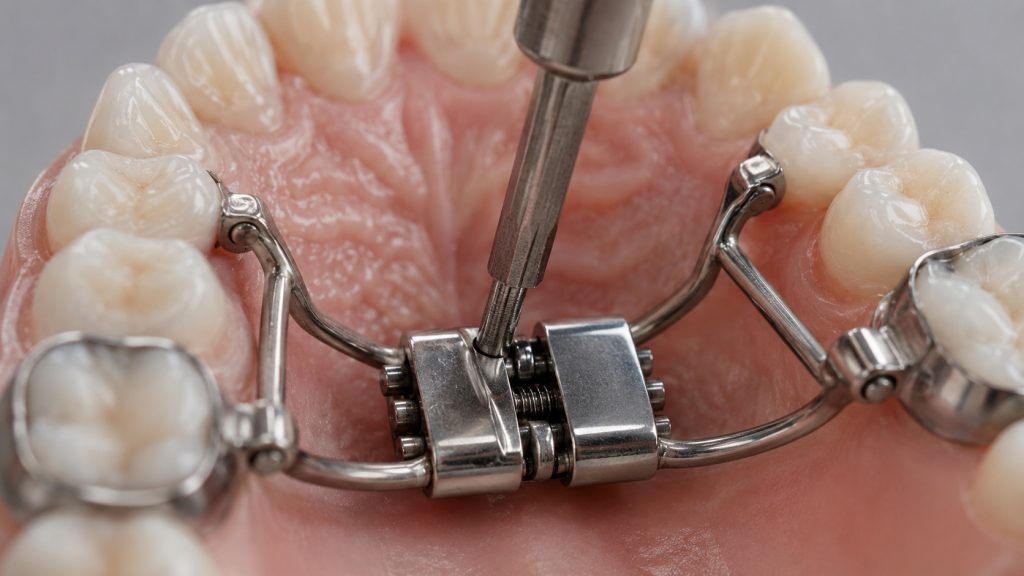
The device is attached to the upper back teeth and sits against the roof of the mouth. Many expanders have a small screw in the middle. You turn it on a set schedule, usually with a special key, and each turn adds a little more width.
Active widening takes about 2 to 4 weeks. During this stage, you turn the screw as your orthodontist directs, and a small gap may open between the front teeth. This gap is normal and usually closes on its own.
After the jaw reaches the right width, the expander stays in place for a few more months to let new bone fill in and harden. In total, most expanders stay in the mouth for about 6 to 12 months.
Types of Palatal Expanders
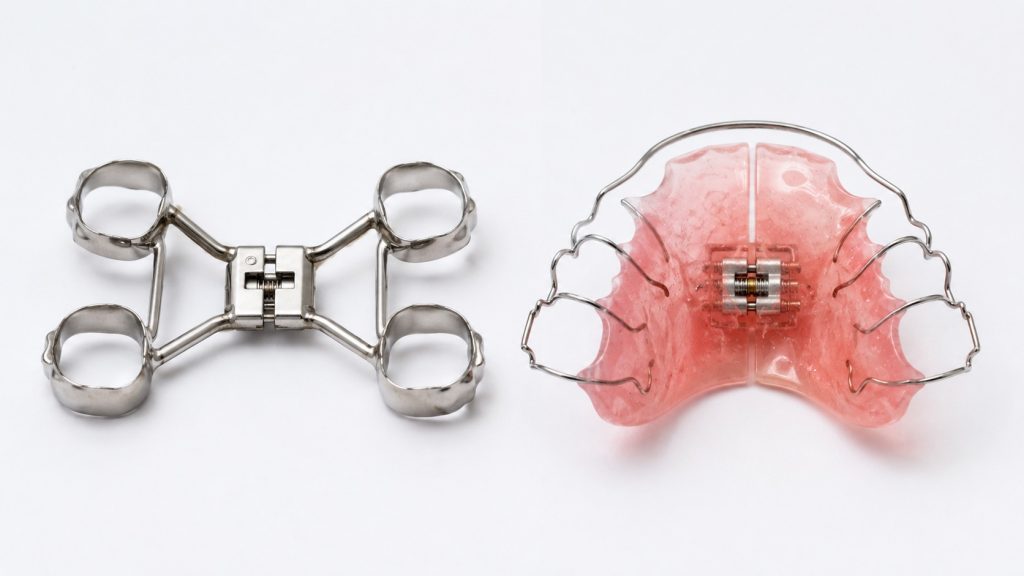
There are two main types of palatal expanders, fixed and removable. Your orthodontist picks the one that fits your child’s needs.
| Point | Fixed expander | Removable expander |
| How it’s worn | Bonded to the back teeth, stays in the whole time | Looks like a thick retainer, taken out as needed |
| Widened by | Turning a screw on a set schedule (often a rapid palatal expander, or RPE) | Built-in design or a screw, depending on the type |
| Best for | Bigger corrections | Smaller, milder corrections |
| Taken out to eat and clean | No | Yes |
A fixed expander does more of the heavy lifting, while a removable one only works if the child actually wears it as told.
What’s the Best Age for a Palatal Expander?
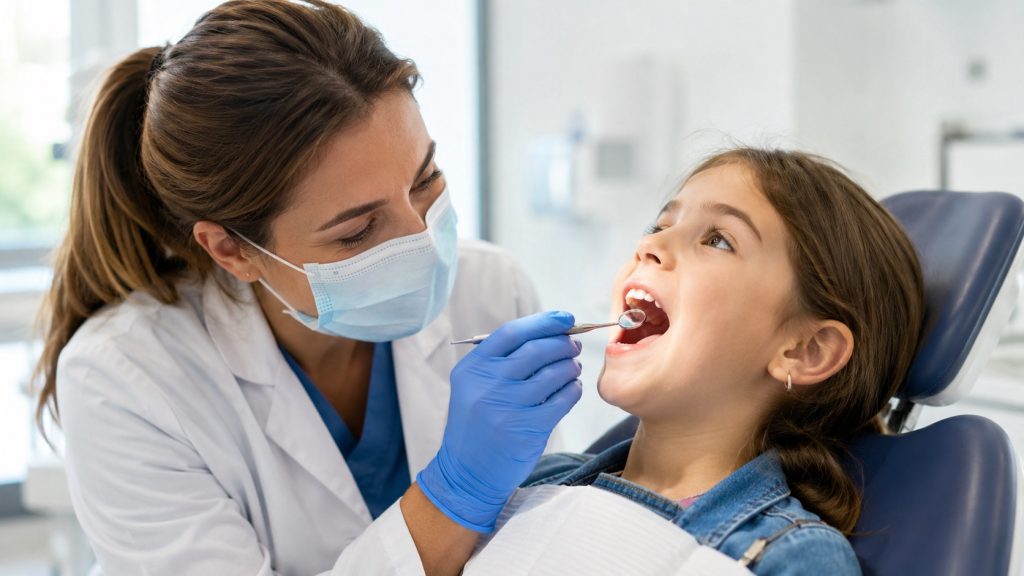
The best age for a palatal expander is usually between 7 and 11, while the jaw is still growing. At this age, the two halves of the palate haven’t joined yet, so they widen easily and gently.
This is why the American Association of Orthodontists recommends a first orthodontic checkup by age 7. It’s not about starting treatment that early. It’s about catching narrow-jaw problems while they’re easiest to fix.
Age 7 isn’t too early, and age 10 isn’t too late, since both fall right inside the ideal window. Once the palate fuses in the teen years, expansion becomes harder, and adults often need miniscrews or surgery to achieve it.
Does a Palatal Expander Hurt?

A palatal expander causes pressure and mild soreness, not sharp pain. Most kids feel it most in the first few days, and right after each turn of the screw, then it fades quickly.
It’s common to notice a full feeling in the mouth, a temporary lisp, and extra saliva at first. These all ease up within a week or two as the mouth gets used to the device, so the early adjustment is usually the hardest part.
Expander Pain vs Braces
Compared to braces, an expander feels different but not worse. Both cause pressure rather than real pain, and the soreness from each is mild and short-lived. A soft diet for the first day or two makes the adjustment easier.
How Much Does a Palatal Expander Cost?

In the US, a palatal expander for a child usually costs between $1,000 and $3,000. The exact price depends on the type of expander, the region you live in, and whether it’s part of a larger treatment plan.
An expander is usually billed as early, or Phase 1, orthodontics, separate from any braces that come later. Expansion for adults costs more because it often requires miniscrews or surgery.
Insurance and Payment Options
Dental insurance with orthodontic benefits often covers part of the cost, usually 30% to 50%, when the expander is medically necessary, like for a crossbite or breathing issue. That coverage draws from a lifetime orthodontic cap, often $1,000 to $2,000.
You can also use an FSA or HSA to pay with pre-tax dollars, and most orthodontists offer monthly payment plans. It’s worth asking the office to check your benefits before treatment starts.
Do Kids Really Need a Palatal Expander?
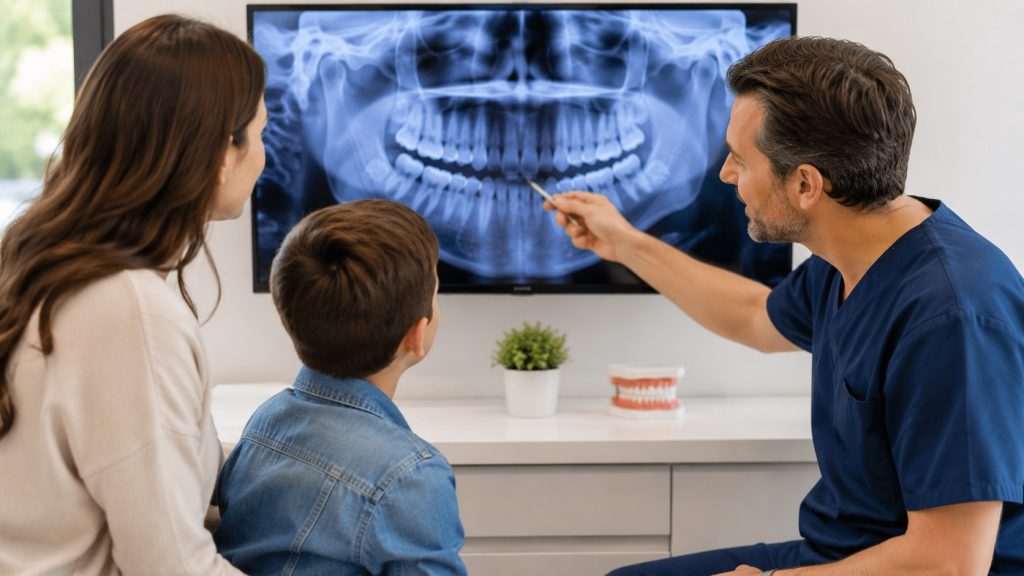
Most kids don’t need a palatal expander, and it’s recommended only when the upper jaw is truly too narrow, usually due to a crossbite, severe crowding, or a breathing problem related to the palate.
You may have noticed more kids getting expanders lately. This is mostly because more children now get early orthodontic checkups, and orthodontists pay closer attention to airway and breathing. For real narrow-jaw problems, fixing them early is easier and can reduce the need for later treatment.
Expanders do have downsides. They can feel uncomfortable after a turn, cause a short-term lisp, trap food, and need careful cleaning. A temporary gap between the front teeth is also normal during treatment.
As for the face, an expander mainly widens the smile and the dental arch. Big changes to facial appearance are rare and usually subtle, but if you’re unsure whether your child needs one, a second opinion is always reasonable.
Frequently Asked Questions
What hurts more, braces or a palate expander?
Neither causes severe pain because both create pressure and mild soreness rather than sharp pain. An expander feels most intense right after a turn of the screw, while braces feel sore after a tightening. For most kids, the discomfort from each is mild and fades within a few days.
Will insurance cover a palate expander?
Often, in part. Many dental plans with orthodontic benefits cover 30% to 50% of the cost when an expander is medically necessary, such as for a crossbite or a breathing issue. Coverage usually draws from a lifetime orthodontic cap of $1,000 to $2,000, and you can use an FSA or HSA too.
Is 10 too late for a palate expander?
No, age 10 is well within the ideal window. The best time is usually between 7 and 11, when the palate is still growing and hasn’t yet joined. Expansion only gets harder once the jaw matures in the teen years.
How long does it take for a palatal expander to work?
The active widening usually takes about 2 to 4 weeks of turning the screw. After that, the expander stays in place for a few months to allow the new bone to harden. Most expanders are in the mouth for about 6 to 12 months in total.
Will a palate expander change the face?
Mostly, it widens the dental arch and the smile. Any change to facial appearance is usually subtle, not dramatic. In some kids, widening the upper jaw can also open the nasal floor, making breathing through the nose a little easier.
What are the cons of a palate expander?
The main downsides are short-term: pressure after each turn, a temporary lisp, extra saliva, and trapped food that needs careful cleaning. A gap often opens between the front teeth during treatment, but it’s normal and usually closes. An expander also adds cost as a separate early phase before braces.