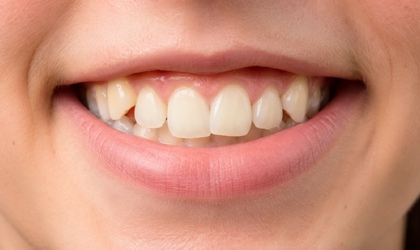
Clear aligners are custom-made plastic trays that gradually straighten teeth by applying gentle, continuous pressure. You wear a series of trays, each one slightly different from the last, and switch to the next every one to two weeks. Each tray nudges your teeth a little closer to their final position.
Invisalign is the best-known brand, but several companies make clear aligners that work the same basic way, and over months, the small movements from each tray add up to a noticeably straighter smile.
What Are Clear Aligners?
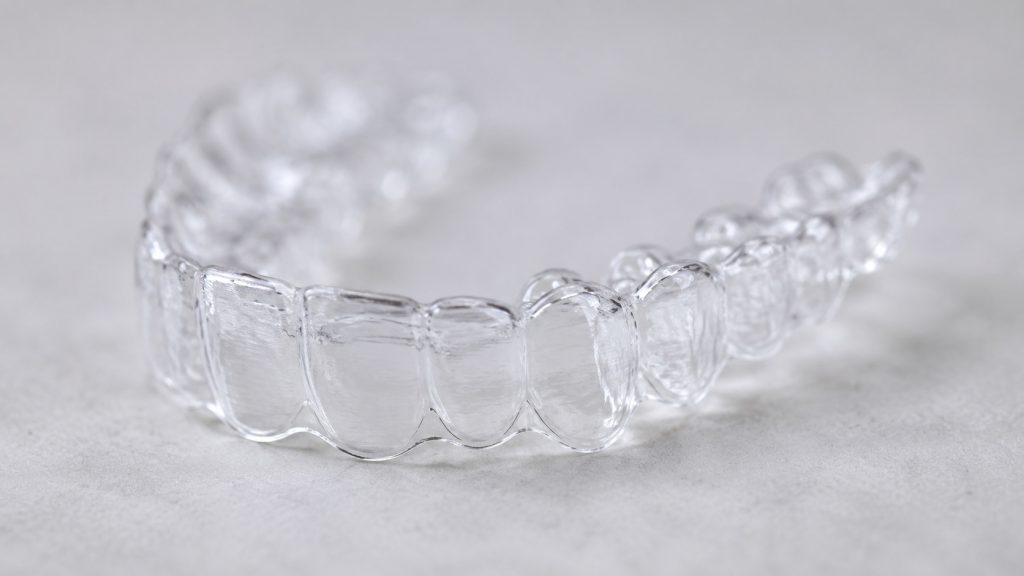
Clear aligners are thin, transparent trays made from medical-grade plastic that fit snugly over your teeth and serve as a removable, nearly invisible alternative to traditional metal braces.
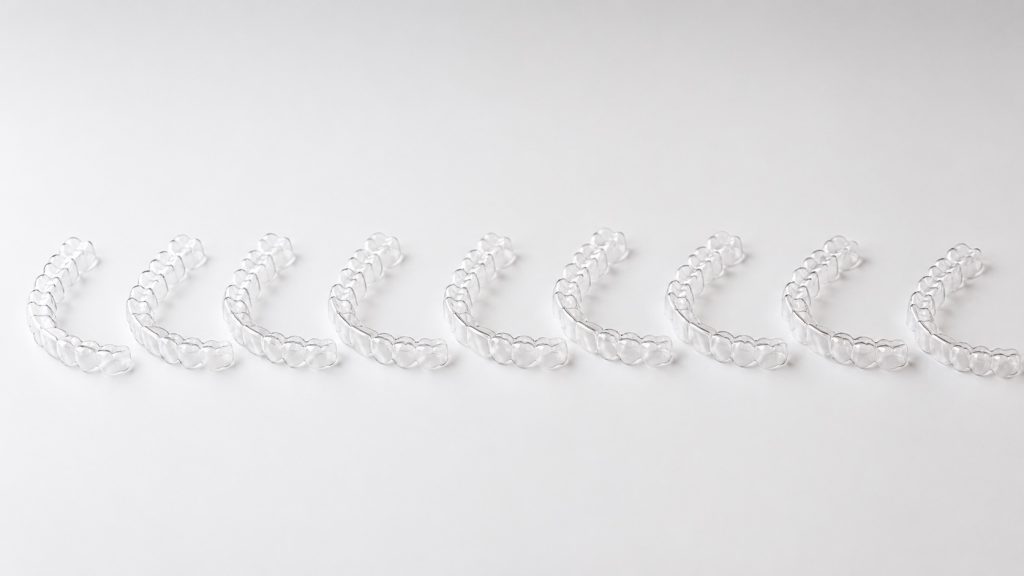
Each set of aligners is custom-made for your mouth from a digital scan of your teeth. You get a full series at once, and you move through them in order as your teeth shift.
Unlike braces, you take aligners out to eat, drink, and brush. The trade-off is that they only work if you wear them most of the day, which we’ll cover below.
How Clear Aligners Move Your Teeth
Clear aligners move teeth using the same biological mechanism as braces: gentle, constant pressure over time. Each tray is shaped slightly differently from your current tooth position, so it pushes specific teeth toward where they need to be.
That pressure works through the periodontal ligament, the soft tissue that holds each tooth in its socket. When a tooth is pushed, the ligament compresses on one side and stretches on the other.
Your body responds by remodeling the bone around the tooth. It dissolves a small amount of bone on the pressure side and builds new bone on the other side, so the tooth slowly moves and stays in its new position.
Each tray moves the teeth only a fraction of a millimeter, which is why treatment uses a series of aligners, with each one continuing the movement where the previous one left off.
The Clear Aligner Process, Step by Step

Clear aligner treatment follows the same path from your first visit to your final retainer. Here’s how it usually goes.
Scan and plan
Your orthodontist takes a 3D scan of your teeth and maps out every planned movement, often showing you a preview of your expected final smile.
Custom trays
A full series of aligners is made just for you, often 10 to 40 trays depending on how much your teeth need to move.
Wear and switch
You wear each tray for 20 to 22 hours a day and move on to the next one every 1 to 2 weeks.
Attachments
Small tooth-colored bumps are sometimes bonded to certain teeth so the trays can grip them for trickier movements.
Check-ins
You see your orthodontist every few weeks so they can track progress and order refinements if a tooth falls behind.
Retainer
Once your teeth are straight, you switch to a retainer that keeps them from drifting back to their old positions.
Why Wear Time Matters
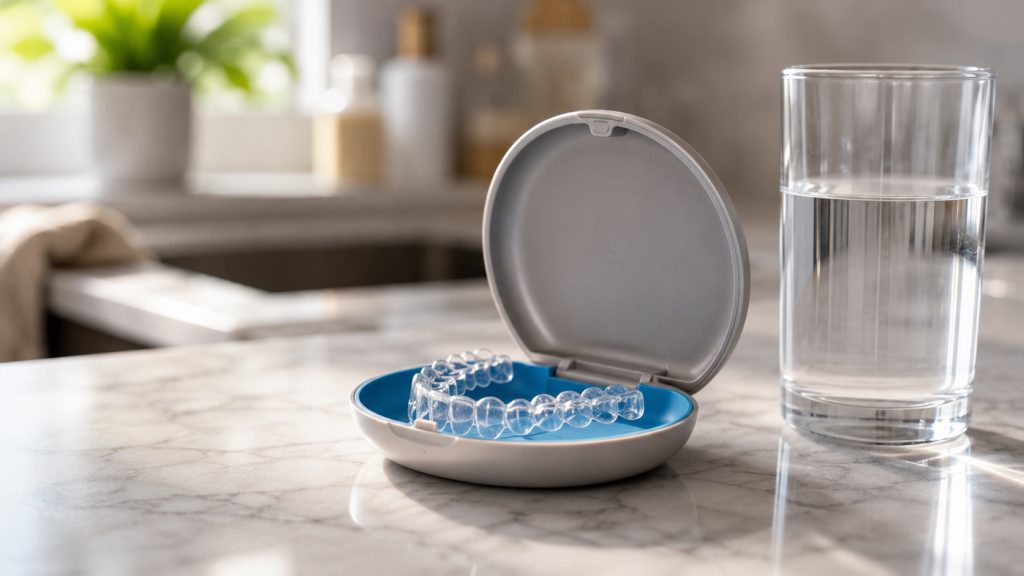
Clear aligners only work if you wear them 20 to 22 hours a day. They reposition teeth through constant pressure, so every hour they spend out of your mouth is an hour your teeth aren’t progressing toward their target position.
You only ever need to take your aligners out for a few specific things.
- Eating any food
- Drinking anything other than water
- Brushing and flossing
The rest of the time, including overnight, they should stay in.
If you wear them less often, your teeth stop keeping up with the trays, so the aligners no longer fit well, progress stalls, and treatment ends up taking longer.
The 30-Minute Rule
The 30-minute rule is a simple reminder to put your aligners back in within about 30 minutes of taking them out. Meals and snacks are the main reason aligners come out, so keeping each break short helps you still hit 20 to 22 hours a day. A quick brush before you pop them back in keeps food from getting trapped.
Do Clear Aligners Really Work?
Clear aligners really do work, and for mild to moderate cases, they straighten teeth as well as braces. Research comparing the two approaches finds similar results for common problems such as crowding, spacing, and minor bite irregularities.
What they handle depends on how much your teeth need to move. The table below shows where aligners shine and where braces may still be the better tool.
| Clear aligners handle well | Harder for aligners |
| Mild to moderate crowding | Severe crowding |
| Gaps and spacing | Large bite or jaw corrections |
| Minor bite problems | Big vertical tooth movements |
| Slightly rotated or tilted teeth | Strongly rotated teeth |
For complex cases, an orthodontist may recommend braces or a mix of both. The best way to know is an in-person exam.
Which Teeth Are Hardest to Move
Round teeth, like canines, are the hardest for aligners to grip and rotate, and the same is true of teeth that need to move a significant distance up or down. This is exactly why orthodontists add small attachments: they give the trays something to push against during these tougher movements.
How Long Do Clear Aligners Take?
Most clear aligner treatments take 6 to 18 months. Simple cases with minor crowding can finish in about 6 months, while complex cases can run 18 to 24 months or more.
Three main factors determine your timeline: how far your teeth need to move, how consistently you wear your aligners, and how your body responds to treatment. Wearing your trays for the full 20 to 22 hours a day is something you control, and it has a big effect on staying on schedule.
Frequently Asked Questions
How much do clear aligners cost?
In the US, in-office clear aligners like Invisalign usually cost $3,000 to $8,000, with a national average around $5,000. At-home aligner brands cost less, often $1,000 to $2,500, but they’re meant for milder cases. Dental insurance often covers part of the cost, and you can use an FSA or HSA.
What are the downsides of clear aligners?
The main downside is that they only work if you wear them 20 to 22 hours a day, so they take discipline. New trays can cause mild soreness for a day or two; you have to remove them every time you eat, and in severe cases, you may still need braces. They also need regular cleaning to avoid stains and odor.
What is the 30-minute rule for clear aligners?
The 30-minute rule means putting your aligners back in within about 30 minutes of taking them out, usually after a meal. It keeps each break short so you still reach 20 to 22 hours of daily wear. Leaving them out too long slows your progress.
Which week of clear aligner treatment is the hardest?
The first week is usually the hardest, since your mouth is adjusting to the trays and the first movements begin. After that, the most noticeable soreness comes in the first day or two after switching to each new tray, then it fades.
Do clear aligners change your jawline?
Clear aligners move teeth, not the jawbone, so they don’t reshape your jaw. That said, straightening your teeth and correcting your bite can subtly change how your lips and lower face look, though any change is usually mild rather than dramatic.
Why do some dentists prefer braces over clear aligners?
Braces stay on your teeth full-time and give the orthodontist more control over complex movements, such as large rotations or major bite corrections. Aligners depend on the patient wearing them as directed, so results suffer if wear time is low. For the right cases, though, aligners work just as well as braces.