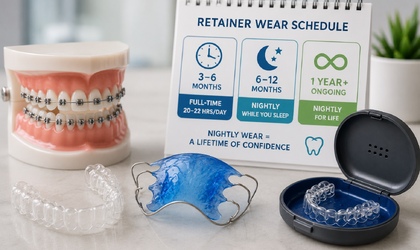
A retainer is an orthodontic appliance worn after treatment. It holds teeth in their corrected positions and keeps them from shifting back. There are three main types: Hawley, Essix (clear), and permanent (fixed). They fall into two groups: removable and bonded.
The right type depends on a few things: how your teeth started, how visible you want the appliance, how reliably you’ll wear it, and your budget. The sections below explain each type and compare them side by side. That way, you can see which one fits your case after braces or clear aligners. For the full service, see our orthodontic retainers page.
The Main Types of Retainers at a Glance
The three main retainers differ in four ways: whether they come out, how visible they are, how long they last, and what they cost.
| Type | Removable? | Visibility | Typical lifespan | Typical cost (per arch) | Best for |
| Hawley | Removable | Visible front wire | 5–10 years | $150–$300 | Durability, future adjustments, and teeth grinders |
| Essix (clear) | Removable | Nearly invisible | 1–3 years | $100–$300 | Discreet daily wear, mild-to-moderate cases |
| Permanent (fixed) | Bonded — not removable | Hidden behind teeth | Many years | $250–$500 | High relapse risk, patients worried about compliance |
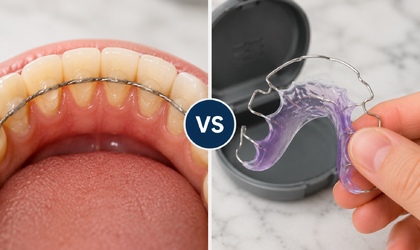
Hawley and Essix retainers are removable. Permanent retainers are bonded behind the teeth and stay in place full-time.
Hawley Retainers
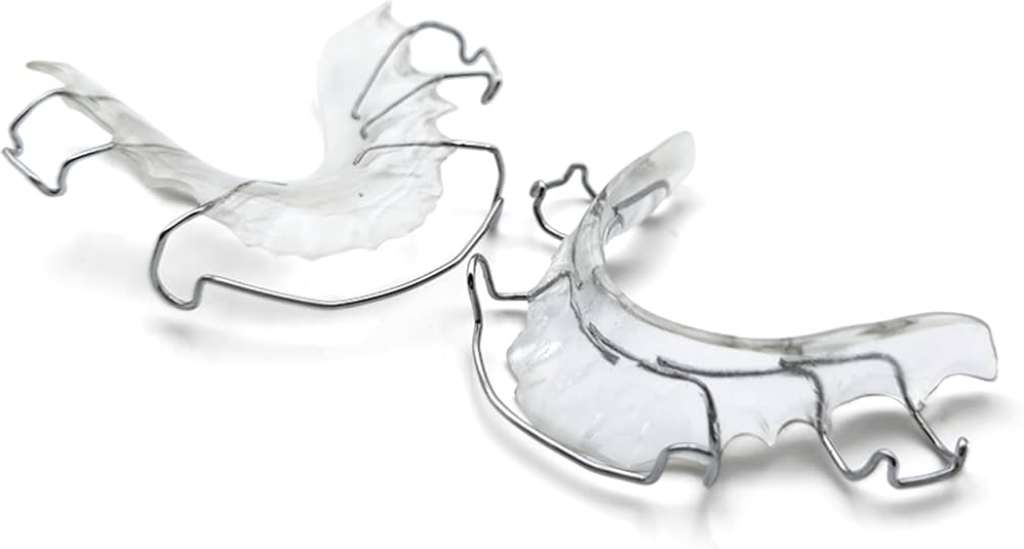
A Hawley retainer is a removable appliance with two parts: an acrylic plate and a metal wire. The plate sits against the roof of the mouth or behind the lower teeth. The wire runs across the front of the teeth.
It is the traditional retainer design. It’s still widely used because it is sturdy and adjustable.
Advantages
- Durable and often lasts 5 to 10 years with proper care.
- Adjustable, so an orthodontist can tweak the wire to fix minor shifting without remaking it.
- Comes out for eating and cleaning.
Disadvantages
- The front wire shows when you wear it.
- It’s bulkier than a clear retainer and can affect speech at first.
- It only works if you wear it consistently, since it comes out.
Hawley retainers suit patients who want a long-lasting, adjustable option and don’t mind the visible wire. They also hold up well for people who grind their teeth.
Essix (Clear) Retainers
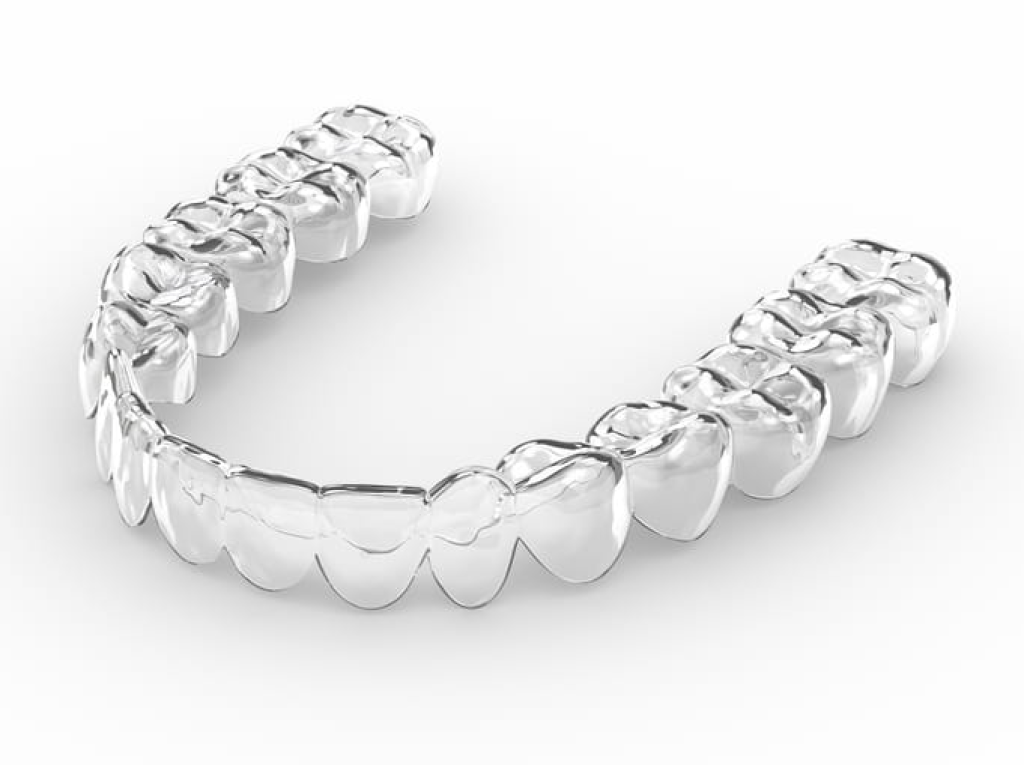
An Essix retainer is a clear plastic tray that fits snugly over the teeth. It looks much like a clear aligner. It’s also called a vacuum-form retainer (VFR), after the way it’s made.
It is the most discreet removable option.
Advantages
- Nearly invisible when worn.
- Lightweight and comfortable, and less bulky than a Hawley.
- Quick to make and easy to wear.
Disadvantages
- Wears out faster and usually lasts 1 to 3 years.
- Teeth grinding can damage it.
- It can’t be adjusted, so if the teeth shift, you need a new tray.
Essix retainers suit patients who care most about appearance and have a stable result. Because they look like clear aligners, they’re a natural fit after Invisalign treatment.
Permanent (Fixed) Retainers
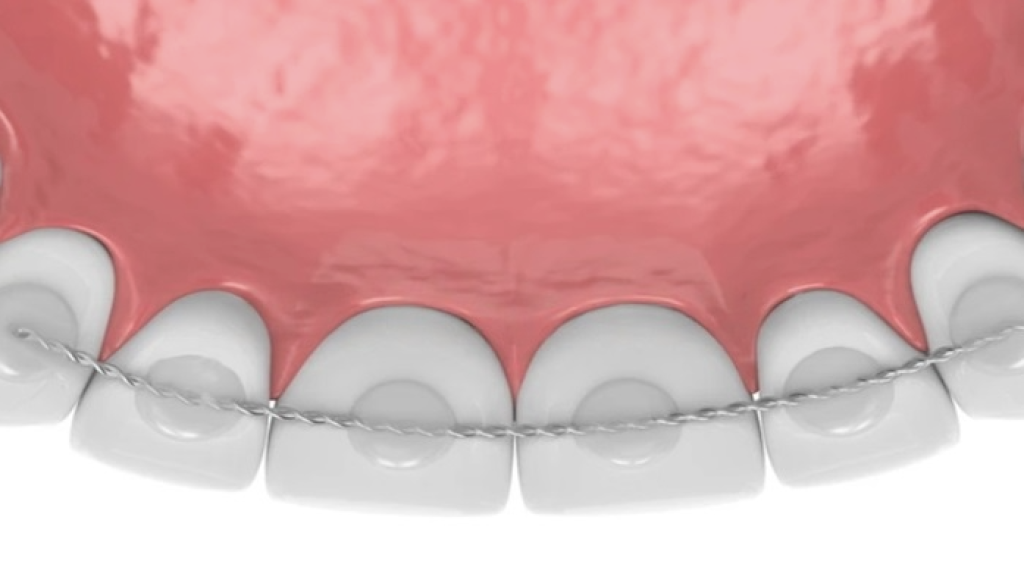
A permanent retainer is a thin wire bonded to the back of the front teeth. It stays in full-time, and you can’t take it out yourself.
It gives constant support, and you don’t have to remember to wear it.
Advantages
- Works around the clock, with no effort on your part.
- Hidden behind the teeth.
- Long-lasting and often stays in place for years.
Disadvantages
- Harder to clean, so you need to thread floss or use a water flosser around the wire.
- It can break or come loose. If that happens, get prompt emergency orthodontic care so the teeth don’t shift.
- It’s bonded only to the front teeth, so it doesn’t hold the back teeth.
Permanent retainers suit patients whose teeth were badly rotated, crowded, or spaced before treatment. They also help patients who’d rather not manage a removable appliance. Orthodontists often pair a fixed lower retainer with a removable upper one.
How to Choose Between Hawley, Essix, and Permanent
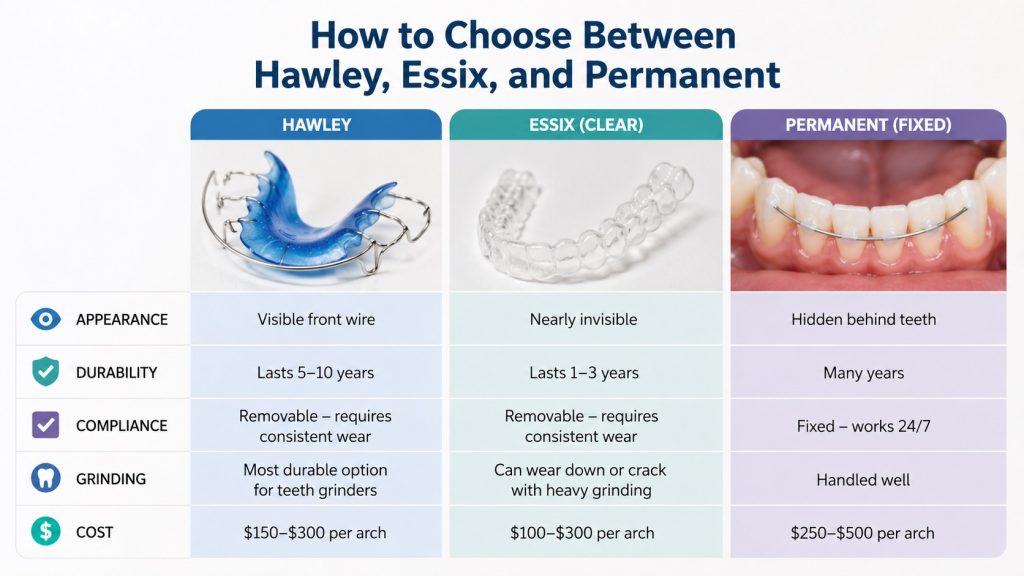
The right retainer comes down to five things: appearance, durability, compliance, grinding, and cost.
- Appearance. Essix is nearly invisible. Permanent hides behind the teeth. Hawley shows a front wire.
- Durability. Hawley lasts longest. Permanent lasts many years. Essix wears out soonest.
- Compliance. Pick a permanent retainer if you’re likely to forget a removable one, since it works on its own.
- Grinding. Hawley handles grinding better than a thin Essix tray, which can wear through.
- Cost. Essix is usually cheapest per arch, and permanent retainers tend to cost the most.
Often it isn’t either-or. A common, balanced choice is a fixed retainer on the lower front teeth plus a removable one on top. Your orthodontist suggests a type based on your case and how your teeth settle after treatment.
How to Care for Your Retainer
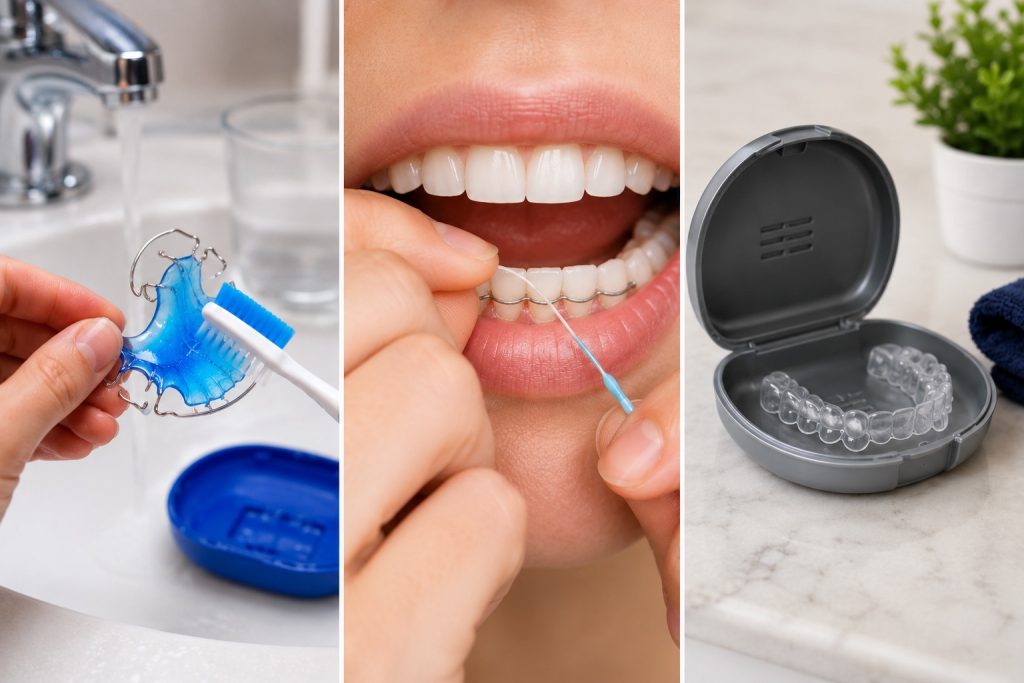
Every retainer needs daily cleaning and steady wear to keep teeth straight. The routine differs by type.
Removable retainers
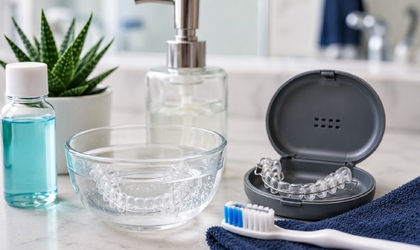
Clean them daily with a soft toothbrush and lukewarm water. Avoid hot water, which can warp the plastic. Store them in a ventilated case when not worn.
Permanent retainers
Brush the wire and nearby teeth with care. Clean under the wire every day with floss threaders or a water flosser. This stops plaque and tartar from building up.
Wear schedule
Most patients wear a removable retainer full-time at first, then switch to nightly. Retainers only hold teeth in place if you wear them as prescribed. See the benefits of wearing your retainer for why it matters.
Frequently Asked Questions
How much do retainers cost?
Per arch, Hawley retainers usually cost $150 to $300. Essix retainers cost $100 to $300. Permanent retainers cost $250 to $500. Your first set is often included in the braces or Invisalign fee, so ask what’s covered before treatment.
How long do retainers last?
Hawley retainers can last 5 to 10 years with care. Permanent retainers last many years. Essix retainers wear down faster and usually need replacing every 1 to 3 years.
Which type of retainer is best?
There’s no single best type, since it depends on your case. Essix is best for discretion. Hawley is best for durability and adjustability. Permanent is best for a high relapse risk, or if you might forget a removable retainer.
Can you sleep with a retainer?
Yes. Removable retainers are made to be worn overnight, and nightly wear is the long-term routine most orthodontists advise. Permanent retainers stay in at all times, including during sleep.
How do you clean a retainer?
Clean removable retainers daily with a soft brush and lukewarm water, and avoid heat. For permanent retainers, use a floss threader or water flosser to clean under the bonded wire each day.
Do permanent retainers ever come off?
A permanent retainer can break or come loose over time, and it isn’t meant to be removed at home. If yours loosens or breaks, book prompt orthodontic care to fix it before your teeth shift.
Retainers at Becker Orthodontics in Phoenixville & Plymouth Meeting, PA
Becker Orthodontics provides custom Hawley, clear, and permanent retainers at two Pennsylvania offices. You’ll find us in Phoenixville (1288 Valley Forge Road, Suite 60) and Plymouth Meeting (1310 Germantown Pike). Both offices offer the same care, and you can reach either one at (610) 935-1547.
Want to know which retainer is right for you? Schedule a free consultation or contact us at either office.