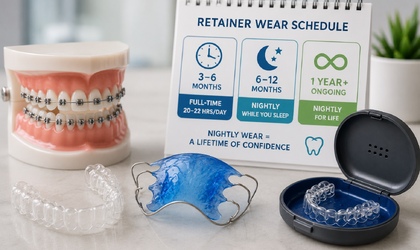
Retainers last anywhere from 1 to 20+ years, and the type you have makes the biggest difference. Clear plastic retainers usually last 1 to 3 years, Hawley retainers last 5 to 8 years, and fixed (bonded) retainers can last 5 to 20+ years with proper care.
Beyond the type, how long your retainer lasts depends on how you wear, clean, and store it. The same retainer can last twice as long for one person as for another, simply because of daily habits.
How Long Each Type of Retainer Lasts
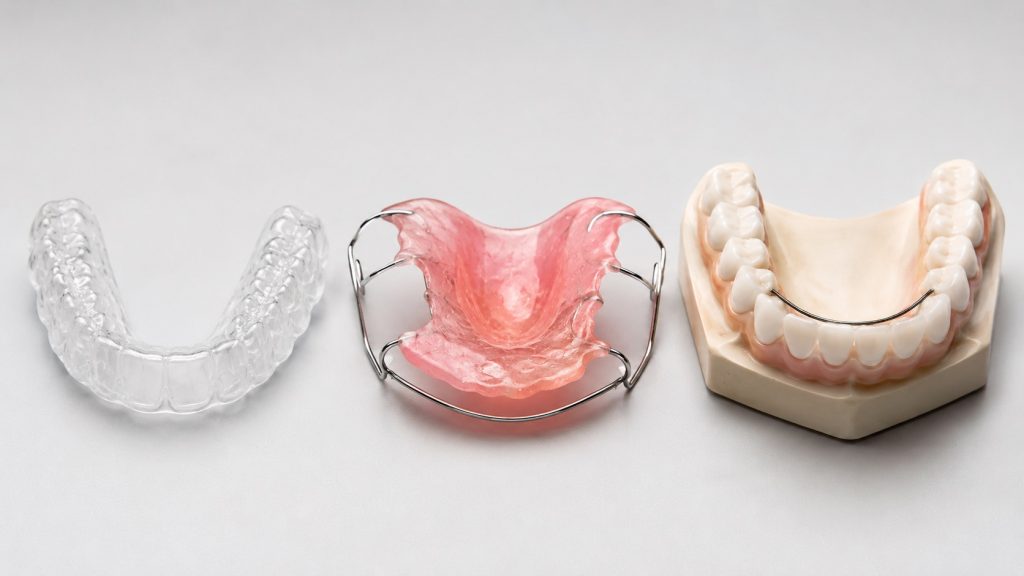
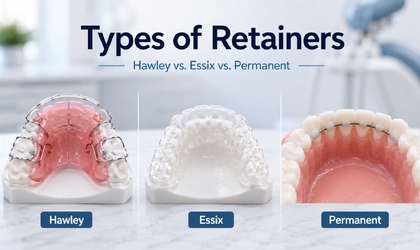
The lifespan of a retainer depends mostly on the material it’s made from, so it helps to look at each type on its own. Here’s how the three main types compare.
Clear plastic retainers (Essix) last 1 to 3 years
These are the thin, see-through trays that fit right over your teeth. They’re comfortable and nearly invisible, but the thin plastic cracks, warps, and wears down faster than other options. Once a clear retainer is damaged, it can’t be repaired, so you’ll need a new one.
Hawley retainers last 5 to 8 years
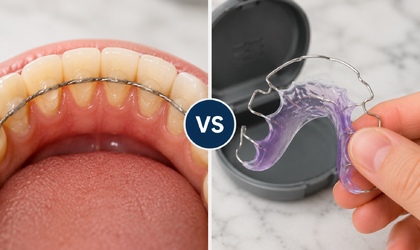
This is the classic style with an acrylic base and a wire across the front of your teeth. The mix of sturdy acrylic and adjustable metal makes them tough, and your orthodontist can often bend the wire back into shape instead of replacing the whole thing.
Fixed (bonded) retainers last 5 to 20+ years
A fixed retainer is a thin wire glued to the back of your teeth, so you never take it out. Because there’s nothing to lose or forget to wear, it tends to outlast every removable option. The main upkeep is the occasional repair if the wire comes loose from a tooth.
| Retainer Type | Average Lifespan | Why It Lasts That Long |
| Clear plastic (Essix) | 1–3 years | Thin plastic; cracks and warps easily, can’t be repaired |
| Hawley | 5–8 years | Durable acrylic and wire; adjustable and repairable |
| Fixed/bonded | 5–20+ years | Always in place; only needs occasional rebonding |
What Affects How Long a Retainer Lasts
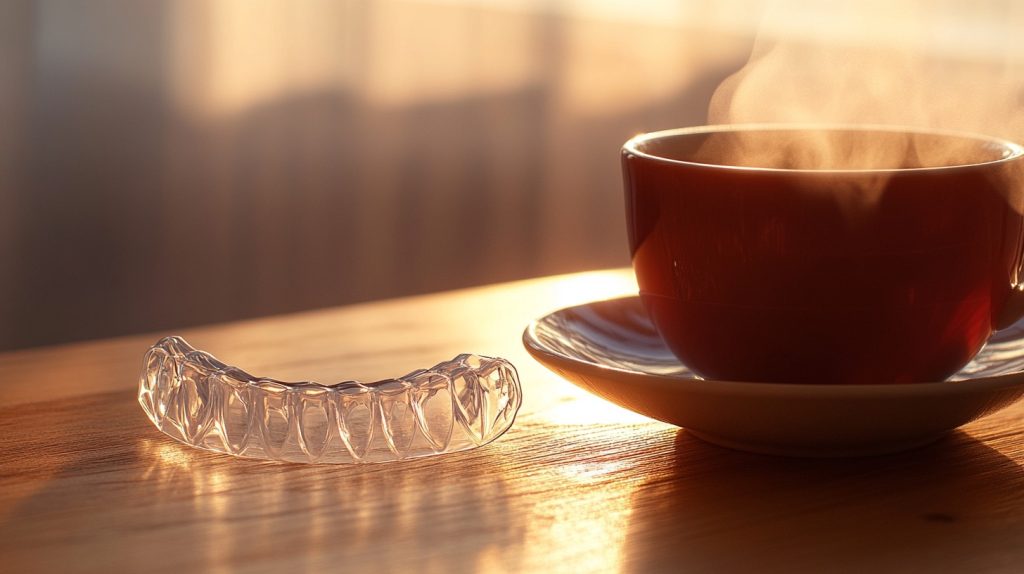
A few everyday factors decide whether your retainer reaches the high end of its lifespan or wears out early. The main ones are how you care for it, the material it’s made from, and whether you grind your teeth.
Cleaning, handling, and storing
How you clean, handle, and store it matters most, because this is the part you control. Rinsing your retainer after you take it out, cleaning it gently, and keeping it in a case all protect the material. Heat is the one thing to watch closely, since hot water, a sunny car dashboard, or a hot drink can warp a clear retainer in minutes.
Material and thickness
The material and thickness also play a role. Thicker, higher-quality retainers last longer than thin ones. A standard clear tray wears out faster than a thicker version or a Hawley, though the sturdier options can feel slightly bulkier at first.
Teeth grinding
Teeth grinding shortens a retainer’s life. If you grind or clench at night, your retainer is subjected to extra force, which can lead to cracks, thinning, and early wear, especially with clear retainers. If you’re a grinder, ask your orthodontist about a thicker material or a Hawley retainer, which withstands grinding better.
Signs Your Retainer Needs Replacing
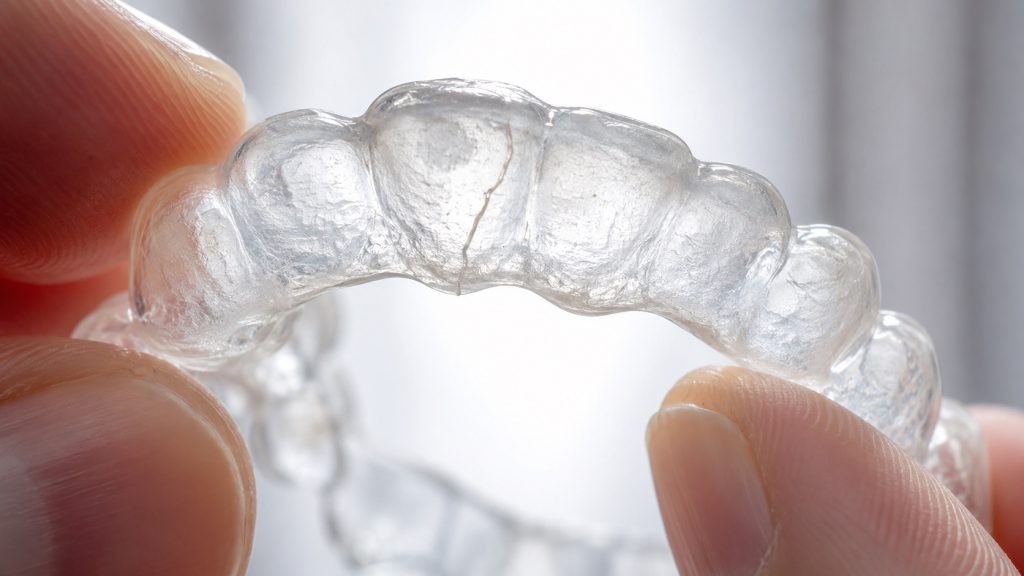
A retainer needs replacing when it no longer fits properly or shows clear signs of damage. Watching for a few simple signs helps you catch problems before your teeth start to shift.
Cracks, chips, or warping
Cracks, chips, or warping are the clearest red flags. Any visible crack means it’s time for a new one, even a hairline one, because cracks weaken the retainer and trap bacteria. A bent wire or a clear tray that has changed shape won’t hold your teeth correctly.
Fit problems
Fit problems are another sign. Your retainer should feel snug but comfortable. If it feels loose, rocks when you put it in, leaves gaps against certain teeth, or clicks, it’s no longer doing its job.
Cloudiness or a smell
Cloudiness or a smell that won’t go away points to a worn-out retainer. Clear retainers should stay mostly clear with normal cleaning. Lasting cloudiness, stubborn white buildup, or a bad smell after cleaning means the material has broken down and soaked up bacteria.
Teeth shifting
Teeth starting to shift is the most important sign of all. If your retainer gets harder to put in, or you notice new gaps or crowding, your teeth are moving, and the retainer needs to be checked or replaced right away.
How to Make Your Retainer Last Longer
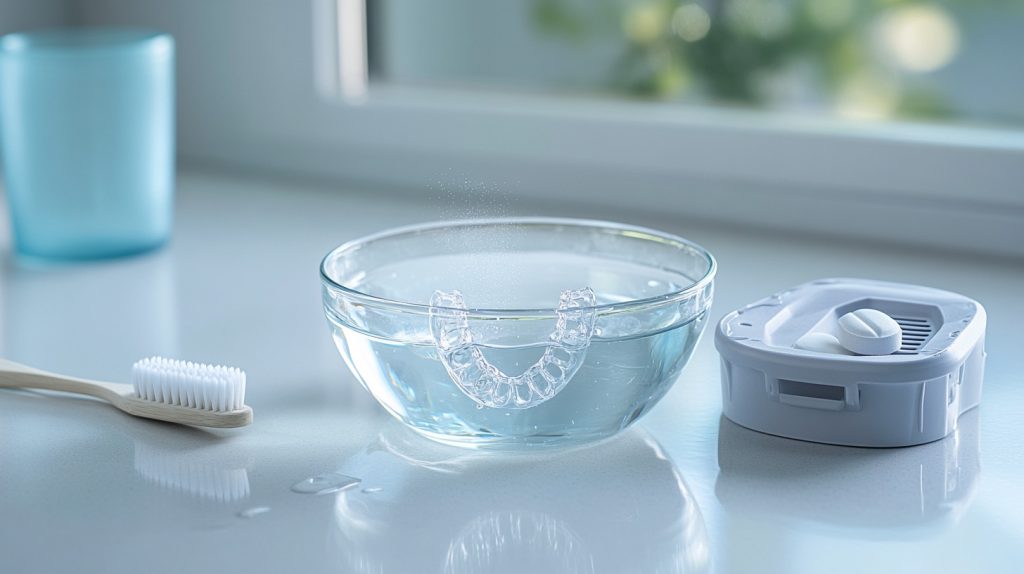
Good daily habits can add months, or even years, to your retainer’s life. The goal is simple: keep it clean, keep it cool, and keep it in its case.
Clean it the right way for its type
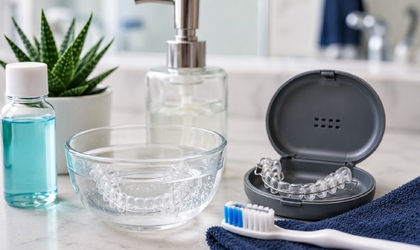
For clear and Hawley retainers, brush gently with a soft toothbrush and mild soap, not toothpaste, which is abrasive and scratches the surface. Soak removable retainers in retainer-cleaning tablets for a deeper clean, and skip mouthwash, which can discolor them. For fixed retainers, floss under the wire every day with a floss threader or water flosser.
Always store it in a ventilated case
Wrapping a retainer in a napkin is the easiest way to lose it or accidentally throw it out. A case with air holes also helps reduce moisture and bacteria.
Keep it away from heat
Never rinse a clear retainer in hot water or leave it in a hot car, and take it out before drinking anything hot. Even brief heat exposure can warp the plastic permanently.
Take it out to eat
Eating with a removable retainer can bend, stain, or crack it. Remove it for meals and snacks, and rinse it before you put it back in.
How Much It Costs to Replace a Retainer

Replacing a retainer in the US usually costs between $100 and $400, depending on the type. Clear or Essix retainers run about $100 to $300, Hawley retainers about $150 to $400, and repairs or replacements for fixed retainers about $150 to $300.
Most dental insurance covers part of your first retainer, but little or nothing for replacements. You can usually pay with an FSA or HSA, which helps cover out-of-pocket costs.
If your orthodontist keeps a digital scan of your teeth on file, replacements are often faster and cheaper, since they don’t need to take new impressions. Either way, replacing a retainer is far cheaper than having to redo orthodontic treatment after your teeth shift.
Frequently Asked Questions
How often should a retainer be replaced?
It depends on the type. Plan to replace clear retainers every 1 to 3 years, Hawley retainers every 5 to 8 years, and fixed retainers whenever the wire loosens or your orthodontist recommends it. Replace any retainer sooner if it cracks, warps, or no longer fits.
Can clear retainers last 10 years?
No, clear retainers rarely last that long. The thin plastic usually wears out within 1 to 3 years, and most people need a new set well before the 10-year mark. A Hawley or fixed retainer is a better choice if you want something longer-lasting.
Do metal retainers last longer than plastic?
Yes. Metal-based retainers, including Hawley (5 to 8 years) and fixed or bonded ones (5 to 20+ years), last much longer than clear plastic retainers (1 to 3 years). The metal wire and sturdier build hold up far better than thin plastic.
Do Essix retainers break easily?
Essix retainers, the clear plastic type, are the most fragile option. The thin material can crack, warp from heat, or wear down from grinding, and it can’t be repaired once it’s damaged. Careful cleaning, cool storage, and a protective case help them last longer.
Is it okay to wear a retainer forever?
Yes, and most orthodontists recommend it. Teeth naturally drift throughout life, so wearing a retainer long-term, usually just at night, keeps them in place. You’ll only need to replace each retainer as it wears out.
Why do orthodontists sometimes advise against permanent retainers?
Permanent retainers are harder to clean and can trap plaque and tartar, which raises the risk of gum problems if you don’t floss under the wire daily. The wire can also come loose from a tooth without you noticing, letting teeth shift. They last a long time, but only with careful upkeep.